

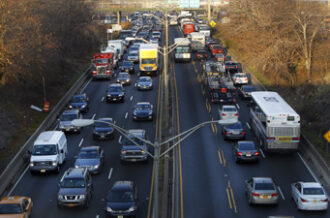
CONGESTION PRICING HAS significantly reduced ambient air pollution across the New York City metropolitan area with pronounced effects within the Congestion Relief Zone (CRZ) in addition to a decline in vehicle volumes.
During the first six months of congestion pricing, average daily maximum concentrations of atmospheric particulate matter declined by 22 percent from projected averages without congestion pricing, according to findings from researchers at Cornell University. Published in Nature’s npj Clean Air in December, A first look into congestion pricing in the United States indicates the volume of vehicles entering the CRZ decreased by about 11 percent during the same period. Heavy-duty truck entries fell by about 18 percent while car entries declined about 9 percent.
The study evaluated short-term impacts using daily particulate matter with a diameter of less than 2.5 micrometers (PM2.5) concentrations from 42 air quality monitors across the metropolitan area, spanning 518 days and almost 18,000 observations.
Core CRZ areas experienced immediate and substantial air-quality improvements while peripheral neighborhoods showed either delayed responses or negligible changes, depending on proximity to the CRZ and exposure to traffic spillover, according to the study.
New York City enacted congestion pricing below 60th Street in Manhattan in January 2025, charging passenger and small commercial vehicles $9 during peak hours in addition to bridge and tunnel tolls.
The complete 10-page study can be found here.